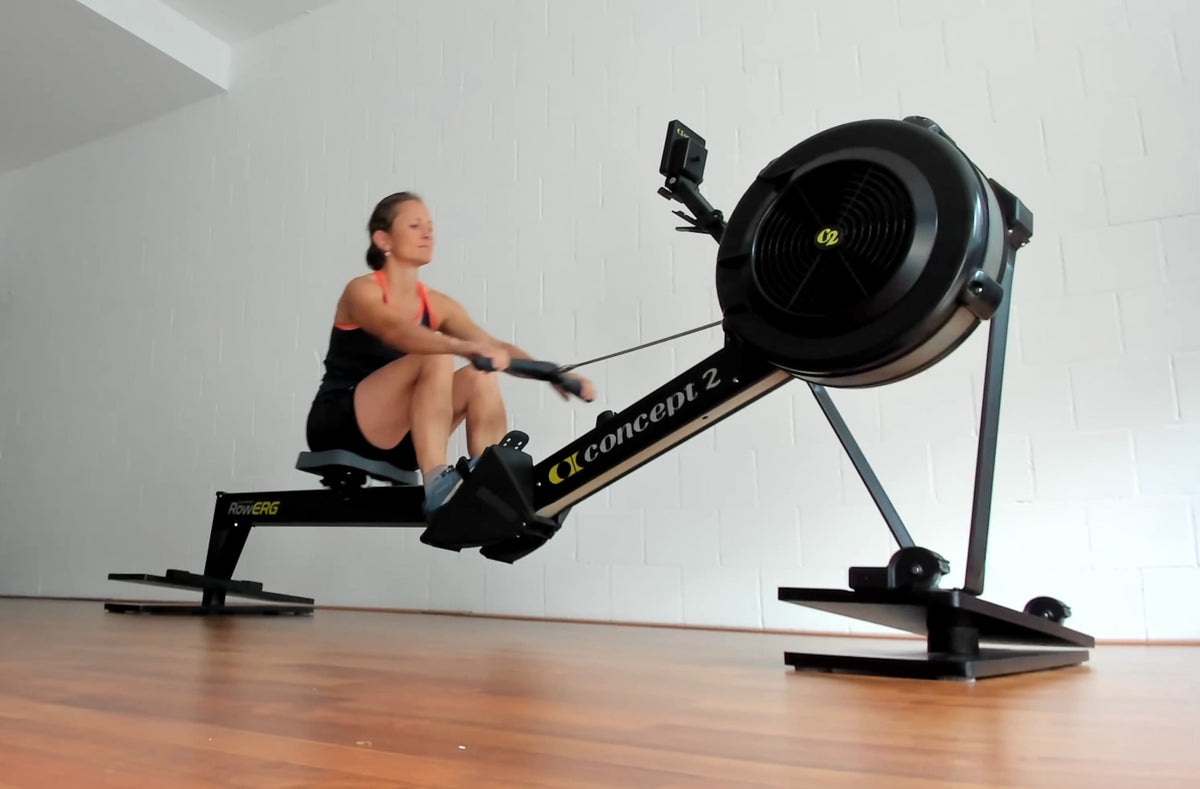
A rowing boat is narrow and sits on the water, so it tips slightly to the side with every stroke, and you keep it level with your core and your hands. A rowing machine stands on the floor and never tips, so it trains your endurance and strength, but not your balance. You can close this gap, either with exercises away from the machine or with a board that makes the machine sway.
What happens in the boat
A single scull is about 30 centimeters wide. It tips as soon as your hands move unevenly, you twist your shoulders or you shift your weight on the recovery. Experienced rowers keep the boat steady without thinking about it: the deep muscles of the core work with every stroke, and the hands feel through the oars where the boat is. That's one reason why rowing on the water is considered a full-body workout that demands a lot of coordination.
What's missing on the rowing machine
The rowing machine takes the sideways movement away from you. The rail sets the direction, your feet are fixed and the machine stays level, no matter how you pull. That has its advantages: anyone can start rowing right away, and you can learn the technique calmly. But your sense of balance has nothing to do, and faults in your posture go unnoticed because nothing tips.
Two ways to bring balance into your training
Away from the machine: standing on one leg, planks with leg raises, exercises on a balance cushion. This trains your balance, but separately from rowing. The link to the rowing stroke is missing.
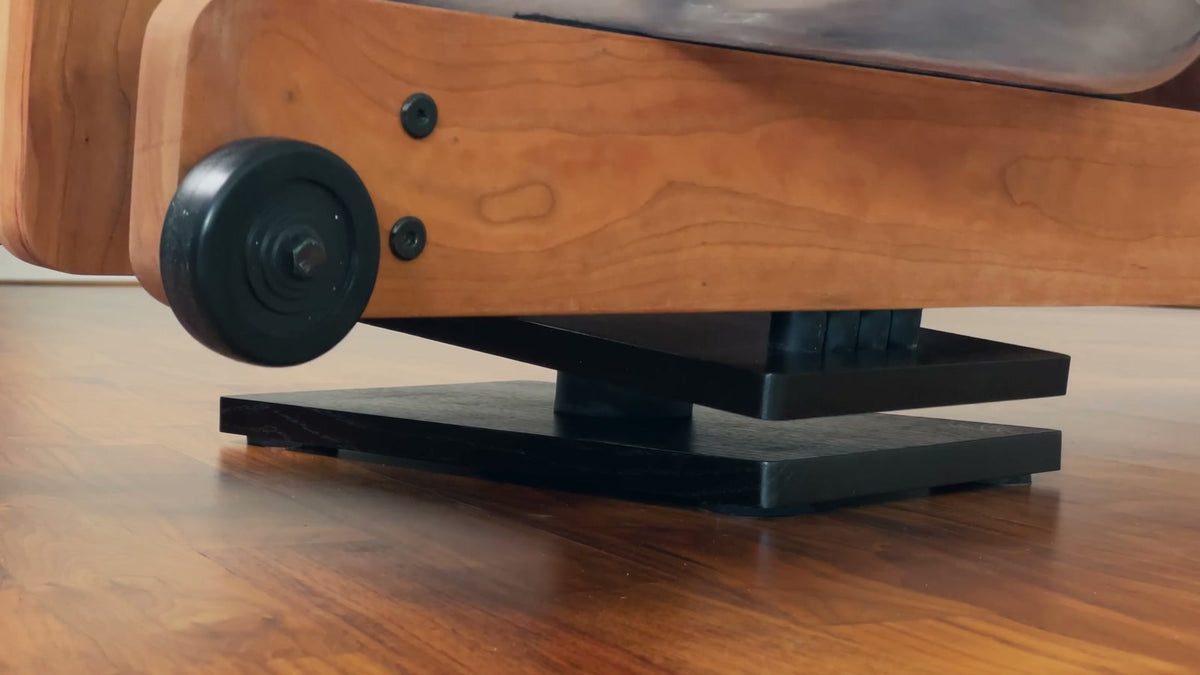
On the machine: The FlowRow Board puts your rowing machine on two moving wooden boards. Rubber buffers between the upper and lower plates let the machine tip sideways, much like a boat. If you shift your weight, you notice it immediately. Your core compensates with every stroke, without you thinking about it.
How much instability is right?
That depends on your body weight and your balance. The board has six balance levels, determined by the rubber buffers, from level 1 (Moderate) to level 6 (Ultra). 9 out of 10 customers start between levels 2 and 4, and level 3 is the most popular. You can change levels at any time with a conversion kit.
Who this makes sense for
For everyone who wants more from their rowing machine than kilometers: rowers who want to keep their feel for the boat through the winter, people who want to make their training more demanding in terms of coordination, anyone who wants to strengthen their deep core muscles and sense of balance and do something for a stable back, and everyone who finds rowing on a fixed rail too monotonous.
→ FlowRow Board for your rowing machine (WaterRower, Concept2 and others)